Decanting toiletries into travel bottles
Check both the toiletry formula and the container instructions before transferring anything.
Smaller is not automatically compatible
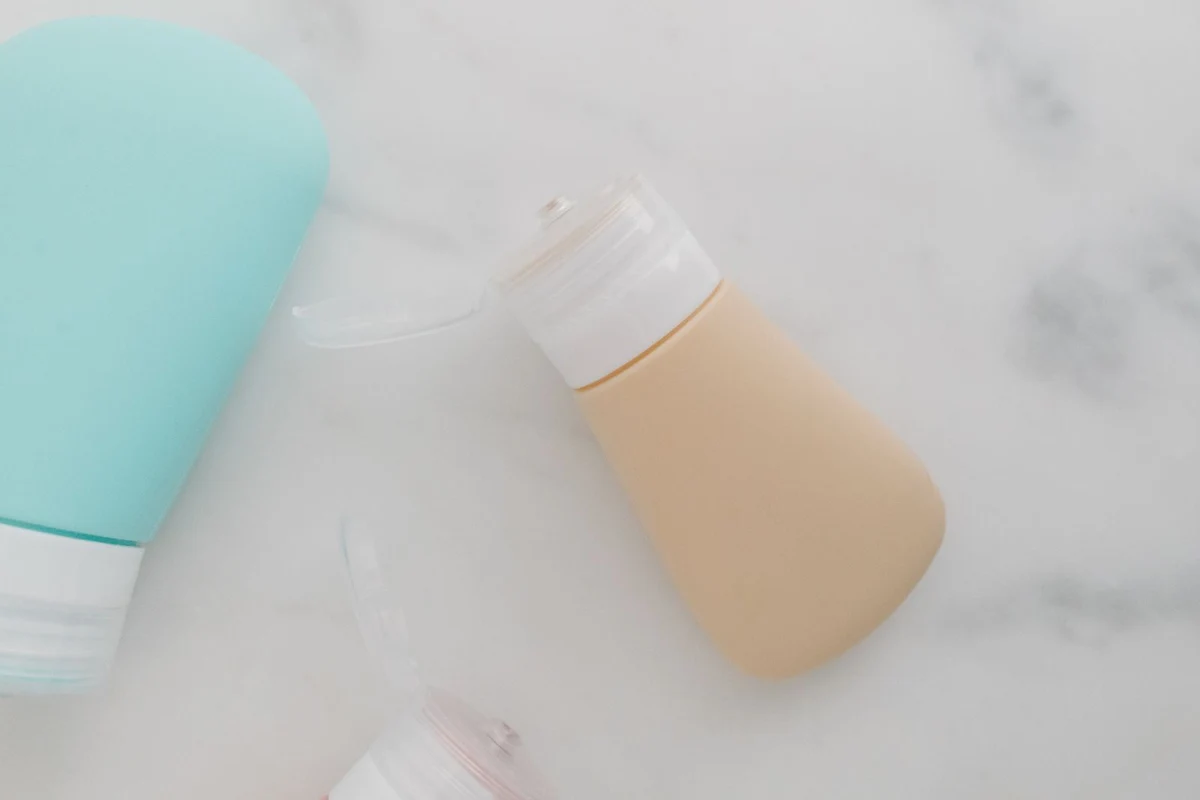
A refillable travel bottle is a container with particular material limits. A product that works in its original packaging may not be suitable for a different plastic, silicone or coated fabric bottle. Read the container manufacturer's compatibility information and the toiletry maker's storage instructions before decanting.
Matador's FlatPak instructions, for example, identify chemical restrictions for that product. This is a useful warning against assuming every travel bottle accepts every cosmetic. It is not a reason to apply the same restriction list to unrelated bottles; check the exact container you own.
Keep products that need their original packaging, precise identification or special storage in that packaging unless the manufacturer confirms otherwise. If you cannot establish compatibility, a manufacturer-supplied travel size may be the simpler option. Do not transfer medicines into ordinary cosmetic bottles.
Label before filling
Choose containers that can be identified clearly after they are wet. Several identical bottles filled with pale liquids are easy to confuse. Write the contents on a suitable label and keep the original product details, including relevant expiry or opening information.
Clean and dry reusable containers according to their instructions before refilling. Do not top up an old unidentified remainder with a different product. Residue and water can change what is in the bottle, and mixing formulas is not a useful space-saving method.
Use a clean suitable method to transfer the product without spreading it over the threads and closure. Do not dilute it merely to make it pour more easily. Leave the fill space recommended by the container maker and close it exactly as directed.
A useful label identifies more than a broad category when similar products travel together. Two bottles marked lotion may still be confusing if one belongs to another person or is intended for a different use. Use the product name or another unambiguous description, and keep any essential directions accessible. If a label loosens when wet, replace it before the next trip rather than relying on the colour or smell of the contents. Do not let a bottle become an unidentified permanent part of the wash pouch simply because a small amount remains.
Inspect the closure
A screw cap needs clean, properly aligned threads; a flip lid needs to close fully. Thick product or particles around the opening can interfere with the seal. Check the outside after filling and wipe away residue using an appropriate method.
Before placing the bottle beside clothing, make a cautious check for leakage over a washable surface, without exposing yourself to the contents. Follow the manufacturer's directions rather than squeezing a flexible bottle aggressively. A brief check at home cannot guarantee how it will behave under every pressure or temperature during travel.
Use suitable secondary containment where a leak would matter. Keep bottles away from objects that could press on their closures or puncture a soft container. A neatly packed pouch should not hold the caps under constant pressure.
Check the journey separately
Bottle capacity and transport rules are different questions. If flying, check the current security requirements for the airports and itinerary as well as the carrier's baggage guidance. Do not rely solely on a label saying travel-approved, particularly when connecting through more than one country.
An oversized bottle is not necessarily accepted merely because it is partly filled. The applicable rule may concern container capacity, and requirements can change. Use the current official instructions for the journey rather than an old packing photograph or a general shopping description.
For road or rail travel, heat and access still matter even when airport rules are irrelevant. Keep products within their stated storage conditions and avoid leaving the pouch in a hot parked vehicle. Pack only the quantity reasonably needed rather than filling every container to its maximum.
After returning
Empty and clean containers as the manufacturers direct. Let all parts dry before storing them, and inspect for swelling, cracking, stickiness or a damaged seal. Stop using a container that has changed unexpectedly and check the compatibility information.
Keep the useful bottles and labels together, but review the contents for each new trip. A container that worked with one shampoo is not automatically cleared for the next formula. The reliable habit is checking the pair of product and bottle, not memorising one rule about all travel containers.