A commuter tote with room for the awkward things
Try the shape with a lunchbox, bottle and the other objects that refuse to lie flat.
Pack the difficult objects first
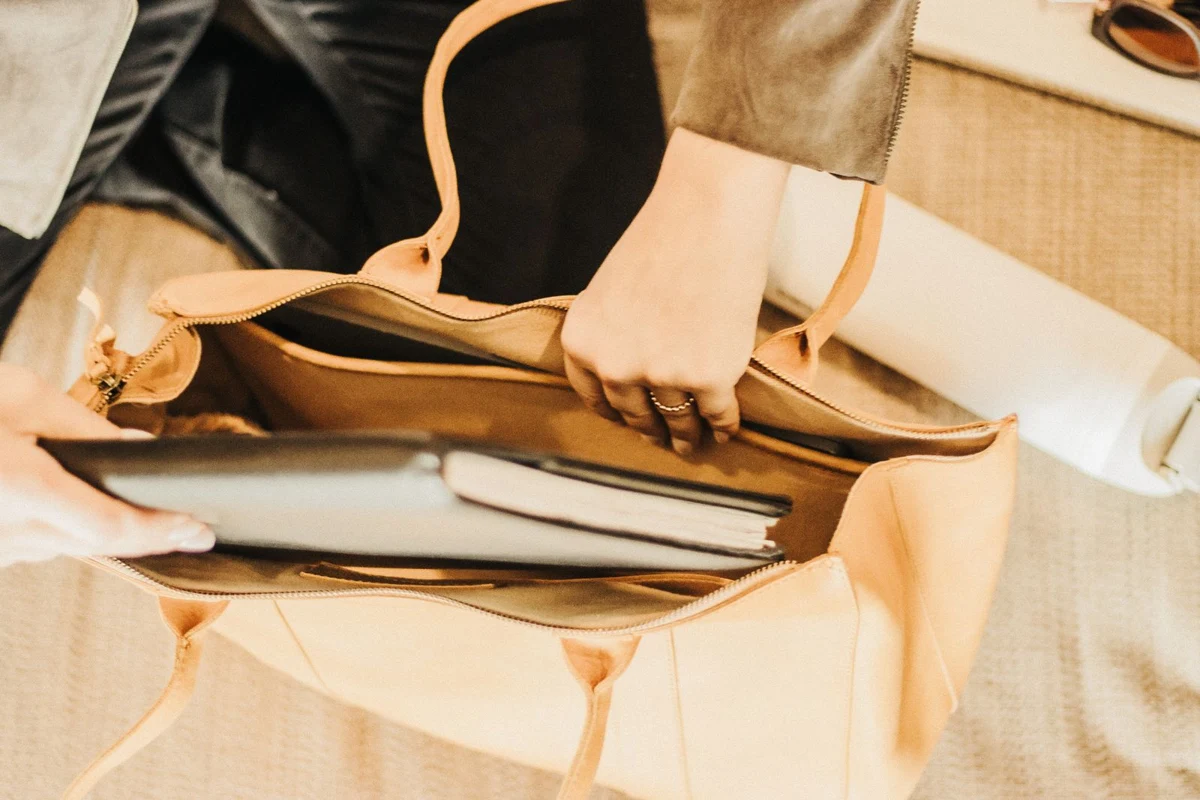
A tote's outside dimensions can look generous while its base is too narrow for a lunchbox. Start with the objects that do not bend: the food container, water bottle, spectacle case or laptop sleeve. Measure them and compare their combined footprint with the bag's usable interior, allowing room for the lining and pockets.
Put the likely load together at home before shopping. You may discover that a bottle and lunchbox need to stand beside each other rather than one above the other. A soft bag will change shape around them, but that does not mean its opening or seams should be stretched to accommodate them.
If the tote will carry a computer, check the device's actual dimensions and the protection offered by the intended compartment. A general size claim may refer to screen size, not the complete machine. Keep drinks separated and properly closed; an interior pocket is not a guarantee against a leaking bottle.
Check the handle drop
The distance from the top of the bag to the top of the handle determines how it sits on your shoulder. Try it over the kind of clothing you normally wear. A handle that is comfortable over a thin shirt may be awkward over a jacket or a layered outfit.
Walk a few steps with a realistic permitted load if the shop allows. Check whether the bag rubs against your leg, slides from the shoulder or becomes difficult to grip by hand. A wide opening is convenient at a desk, but a secure closure may suit a crowded commute better. Choose for your route rather than for the number of pockets in the listing.
Look at how the handles join the bag. Inspect stitching and reinforcement without pulling hard on shop stock. Ask for any stated load guidance. The fact that an object fits does not mean the bag is designed to carry its weight every day.
Find things without unpacking
Reserve an accessible place for keys and travel cards. A light lining or a contrasting small pouch can make dark objects easier to find. Avoid filling every available pocket just because it exists; that can turn the tote into a collection of forgotten items.
At home, empty crumbs, loose receipts and damp items rather than leaving the next day's load packed indefinitely. Follow the care instructions for the complete bag, including handles and lining. The best shape is the one that carries your ordinary awkward objects and still lets you reach the thing needed at the gate.
When the route changes
A bag used mostly from home to a car may feel different on a longer walk or a journey involving several changes of transport. If the new route is becoming regular, test the existing tote with the normal load before replacing it with a larger one. The problem may be carrying method rather than capacity.
Keep the daily contents visible for a week and remove items that never earn their weight. A spare pair of shoes or a thick notebook may need a separate plan on certain days. Choosing a tote around the heaviest imaginable day can leave you carrying unnecessary bag weight on every ordinary one.