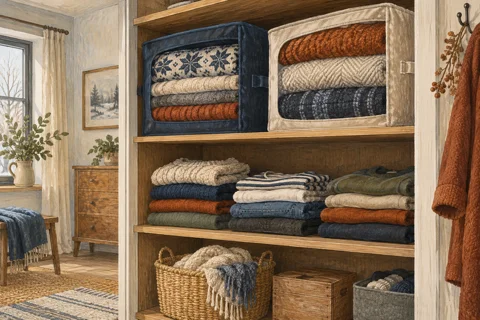
A storage bench is still something to sit on
The seat, lid and storage compartment each need to work in the place you have chosen.
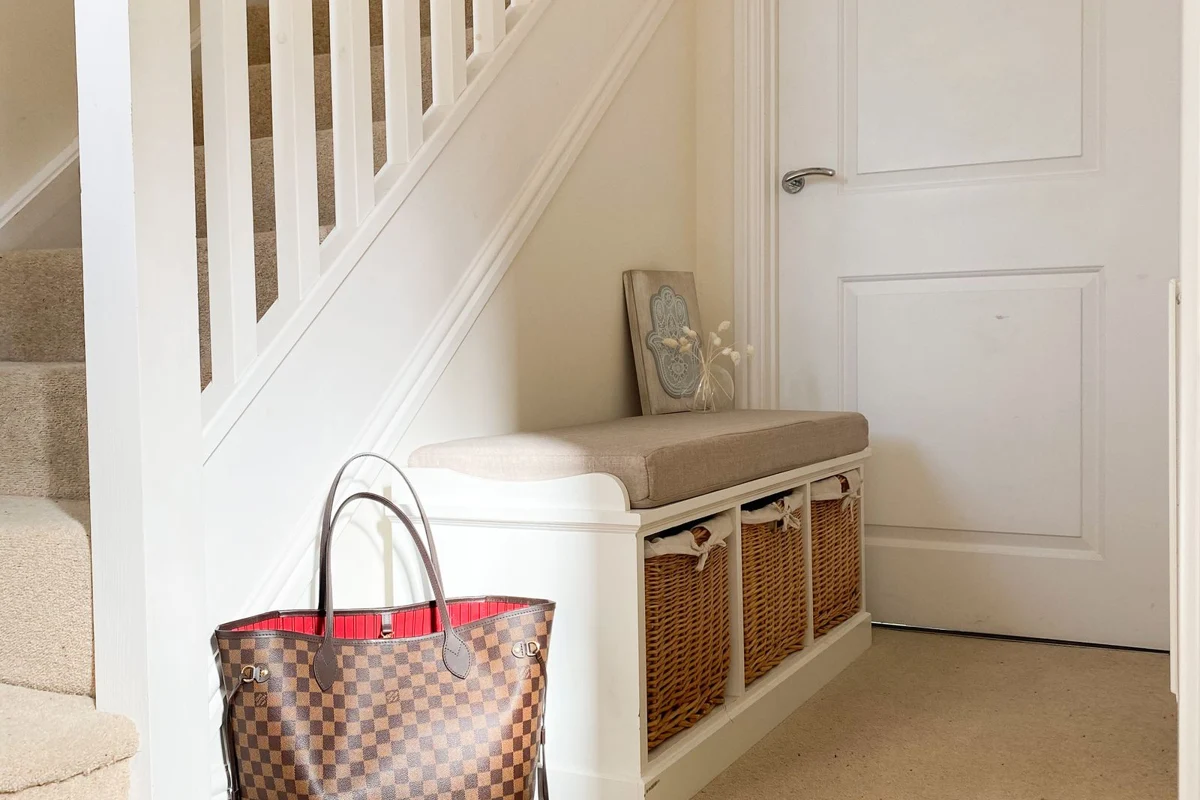
Begin with the sitting position
A storage bench is still furniture intended to support a person only if the manufacturer says so. Confirm the seating purpose and load rating. A box with a padded-looking top is not automatically a bench, and a bench is not a step platform.
Compare the seat height and depth with the way it will be used. Putting on shoes calls for a different position from sitting at a table. If possible, try a display model and notice whether the height lets you stand comfortably. The internal volume is secondary if the seat itself is awkward.
Open the lid in the room
A hinged lid needs clearance from the wall and any shelf above. A removable top needs somewhere to rest. Measure the opening movement, not just the closed footprint. If opening the bench means shifting it every time, its storage may quickly become a place for things you forget.
Read the lid mechanism's safety instructions and consider the users, including children. Keep fingers clear of hinges and do not rely on a lid staying open unless the design provides that function. Never use a storage compartment as a play space or assume it is safe for a child to climb into.
Choose contents that suit the compartment
Soft throws, dry accessories and occasional items may fit differently from shoes or heavy tools. Check ventilation and material care. A closed upholstered bench is not a good answer to damp footwear simply because it conceals it.
If the bench contains a fabric lining, find out whether it can be removed or cleaned. Crumbs, dust and small objects will settle at the bottom. An opening too narrow to reach the corners makes maintenance harder.
Test access with the seat in use
Picture the bench on a busy morning. Someone is sitting to put on shoes while another needs an item stored inside. If the whole lid forms the seat, the second task must wait. That may be perfectly acceptable, but it suggests storing occasional items rather than essentials needed at the same moment.
Drawers or side openings offer a different arrangement, although they need clear floor space in front. Check that an open drawer will not obstruct the entrance or become a trip hazard. The storage mechanism should suit the location's movement, not just the amount it can hold.
If a cushion is removable, decide where it goes when the compartment opens. A thick cushion placed on the floor every time can make the storage inconvenient and introduce another cleaning task. A simpler fixed seat with a suitable drawer may fit the routine better, while a lift-top bench may be ideal for a seldom-used group. Compare the sequence, not only the capacity.
Keep the route clear
In an entrance, leave room for the door and for people passing a seated person. A bench that fits against the wall can still make the corridor feel cramped once knees and shoes occupy the space in front.
Follow assembly, fixing and load instructions, and check fittings as recommended. Choose a size that can remain in its intended position rather than being dragged around while full. The best use of the storage is often a modest group of items that can be reached without turning the seat into a permanent pile.