Check the route from the door to the room
The destination may have room for the furniture even when the doorway does not.
Follow the whole route
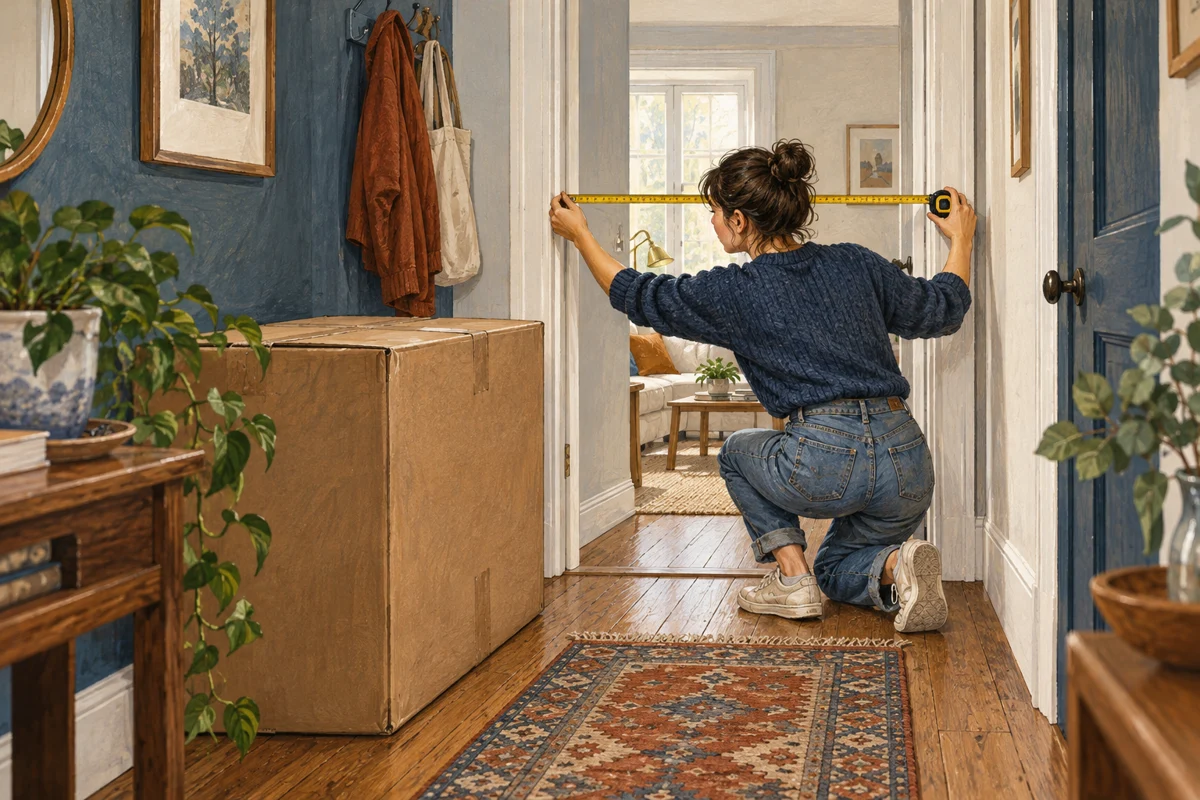
Start at the point where a delivery vehicle can stop, then follow the route to the final room. Gates, lift doors, stair turns and corridor corners can all be narrower than the entrance to the home. Measure the actual clear opening rather than the outside of the frame.
Find the packed dimensions and weight, not only the assembled product dimensions. A flat-packed desk and a rigid sofa present different problems. If an item arrives in several cartons, check every carton; the longest one may contain a single panel that cannot bend around a corner.
A turn is more than two widths
A large object may fit through two straight passages separately and still fail at the turn between them. Ceiling height, railings and the space opposite the corner affect how it can be manoeuvred. Do not promise a delivery team that something will fit based only on one diagonal calculation.
For a close or complicated route, send measurements and photographs to the retailer or delivery provider and ask for their assessment before ordering. Ask what happens if access is unsuitable, including any collection or redelivery arrangements. These terms vary, so a previous delivery is not a dependable guide.
Avoid planning to remove structural fittings or improvise lifting methods to rescue a purchase. If a door needs temporary removal or another change is proposed, it should be agreed and handled appropriately in advance. A rushed workaround at the kerb is not a delivery plan.
Understand where the service ends
Check whether delivery means the building entrance, your floor or the room where the item belongs. Ask about stairs, lifts, assembly and packaging removal if they matter. A service description that sounds generous can still exclude the particular task you need.
Prepare a clear area for the cartons and assembly, keeping exits usable. Protect surfaces in the way the delivery team recommends, without creating a slippery route. Arrange for someone able to receive and inspect the order according to the retailer's process.
Keep the order details available and check the visible package labels against them. If something appears damaged or incomplete, follow the seller's reporting procedure promptly and retain relevant packaging and photographs. Do not discard everything before you have established that the item and its parts are present.