A bath mat needs to dry as well as absorb
The mat, its backing and the floor beneath it all need attention.
Look underneath before looking at the colour
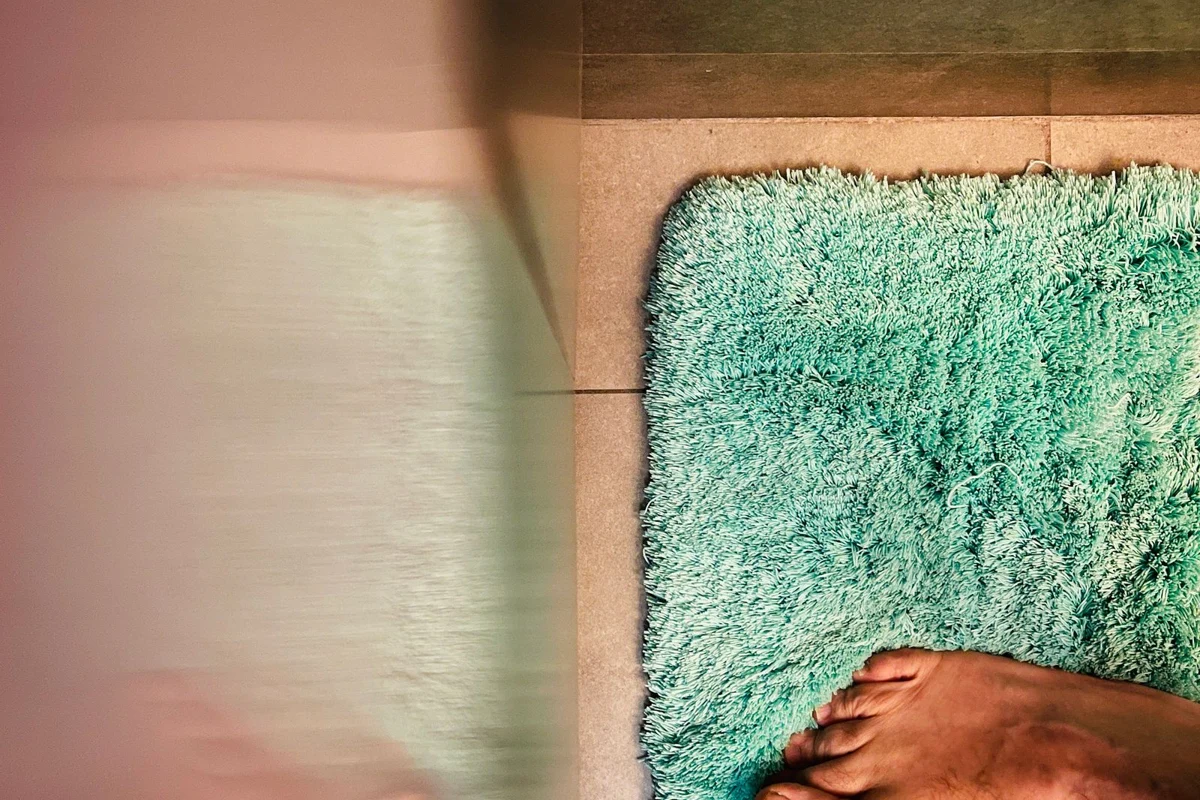
A bath mat has two different jobs: receiving water from wet feet and staying suitably placed on the intended floor. The label should say where and how it can be used. A soft woven mat, a backed mat and a rigid slatted platform are not interchangeable, and none should be assumed secure on every wet surface.
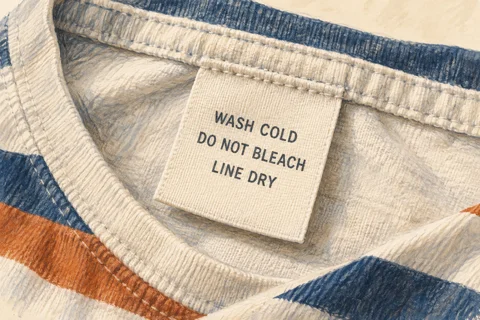
Check the backing's care instructions as carefully as the face fabric. A cotton top does not mean the complete mat can take the same wash or drying treatment as an unbacked cotton towel. Heat, detergents and ageing can affect backings differently. If the maker specifies a particular floor condition, follow it rather than treating the mat as a remedy for a continuously wet floor.
Leave room around the door
Measure the space with the door fully open. Include the thickness of the mat, not just its footprint. A door that catches the edge may roll the mat over every time someone enters. Place it so people can step onto it naturally without stretching from the shower, while keeping the route clear.
In a small bathroom, the largest possible mat is not always the easiest choice. It may sit beneath a cabinet edge or against the toilet base where it is hard to lift. A manageable size lets you check and dry the floor beneath it, then return the mat without rearranging the room.
Look for curled corners and wear during ordinary use. If the mat moves, folds or creates a trip point, stop relying on it in that position. Do not solve one insecure layer by stacking several mats. Choose a product and placement appropriate to the actual surface.
Plan the drying space
Lift the mat when necessary to let both it and the floor dry. A thick wet pile folded over a narrow rail may stay damp inside for a long time, particularly during humid weather. Check that the rail can support the load and that the mat will not drip onto an unsuitable surface.
Keep a spare if your wash-and-dry cycle leaves the bathroom without a usable mat. Follow the label, inspect the backing after laundering and replace it if it is breaking down. A mat that still looks attractive from above may have stopped behaving well underneath.