Read the care label before choosing the wash
Read the full label before selecting a programme. The wash temperature is only one part of the instruction.
Start before the textile is wet
The best moment to read a care label is before buying, while you can still decide whether the item suits your home. A curtain needing professional care may be reasonable in one room and inconvenient in another. A large cover that cannot use your available drying method can become a storage problem after its very first wash.
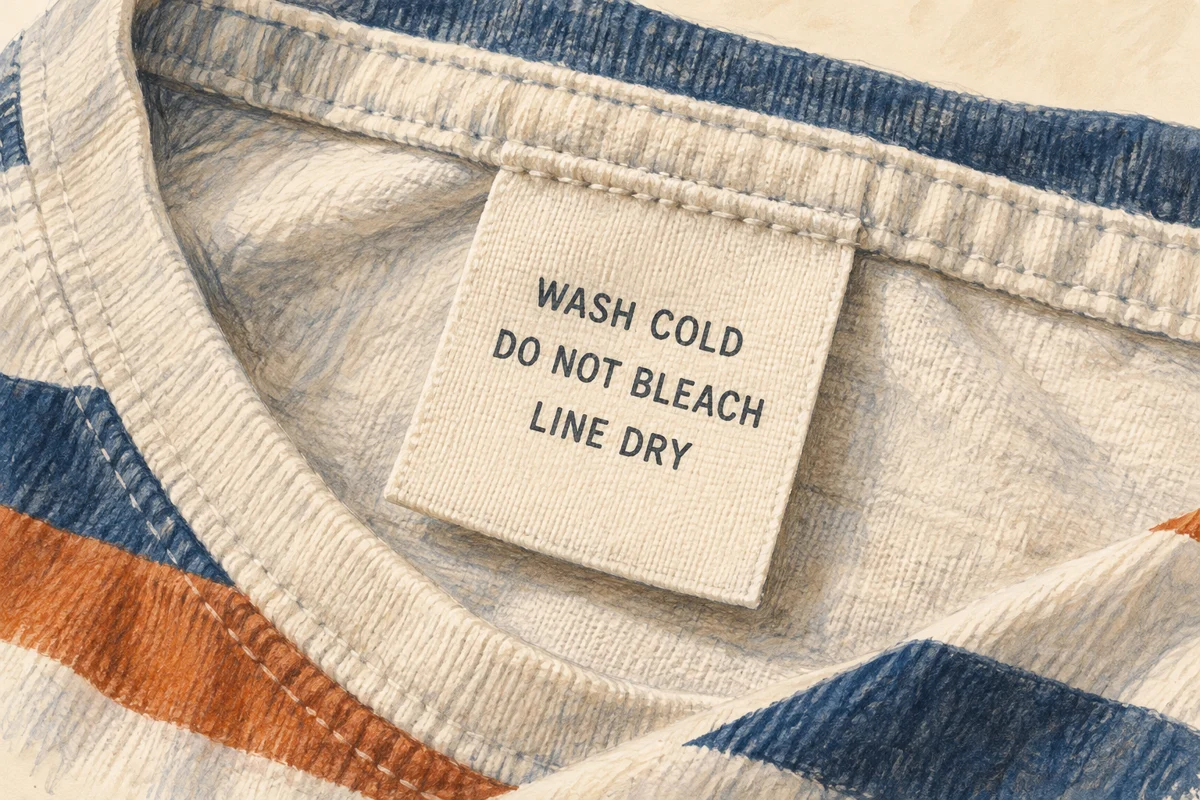
Check for written instructions as well as symbols. Photograph a small label if it is difficult to read. Keep the product name with the photograph so a collection of similar white tags does not become confusing later. If the label is missing or illegible, ask the manufacturer about the exact item rather than borrowing instructions from a similar-looking fabric.
The instruction applies to the finished product. A cotton face fabric may be attached to a backing, lining, filling or trim that changes the permitted treatment. That is why a fibre-composition label alone cannot choose the wash programme for a bath mat or a lined curtain.
Read a sequence, not one number
Care information covers washing, bleaching, drying, ironing and professional cleaning. A permitted wash temperature does not automatically permit every spin cycle, tumble setting or stain treatment. Read the whole sequence before pressing start.
In the GINETEX system, the number in a wash tub indicates a maximum temperature, while bars beneath it indicate a gentler process. A crossed-out treatment means it is not permitted. The drying instruction is separate from the washing instruction. These distinctions explain why choosing the right temperature alone can still leave the rest of a programme unsuitable.
Use the machine manual to identify an appropriate programme. Names such as daily, mixed or gentle vary between machines. If you are uncertain about what a programme actually does, consult its description rather than assuming its name matches the textile's needs. Follow the machine's load guidance as well; a bulky piece needs room to move as intended.
Notice the parts that come off
Before washing a cushion cover, curtain or travel pouch, check what should be removed. Hooks, inserts and detachable straps may have separate instructions. Keep small hardware together in a labelled container while the textile is being cleaned, so it does not disappear into the linen cupboard.
Close or arrange fastenings as the maker directs. Inspect loose seams and trims before loading the machine. A small repair may prevent a loose edge from catching and becoming a much larger problem. Do not cut off an inconvenient label until you have preserved its information somewhere reliable.
For paired items, consider washing them together when the instructions and machine capacity allow. Cleaning one curtain panel repeatedly while leaving its partner untouched can produce a visible difference in use and appearance. If they cannot be washed together, keep the method consistent.
The drying stage needs a plan
Have the drying space ready before starting a large load. A label may specify flat drying, line drying or a particular tumble treatment. Hanging an item that needs support can change its shape, while packing a rack too tightly can leave folded areas damp long after the exposed fabric feels dry.
Do not substitute direct heat for time without checking the instructions. Avoid placing textiles over heaters or near cooking flames. If the permitted method is impractical in the weather you have, postpone the wash or arrange a suitable alternative rather than improvising when the item is already wet.
If two instructions appear to conflict, stop and ask the manufacturer. This is especially worthwhile for expensive, backed or multi-material pieces. Keep any reply with the product record. A short clarification now is less work than trying to restore a damaged fabric or finding a replacement for one half of a matching pair.