A wallet layout that matches what you carry
Count the cards, notes and coins you really carry before choosing a slim or compartmented wallet.
Empty the current wallet
Spread the contents on a table and separate what is used regularly from old receipts and expired cards. The shape needed for the remaining items may be quite different from the shape of the overfilled wallet you started with.
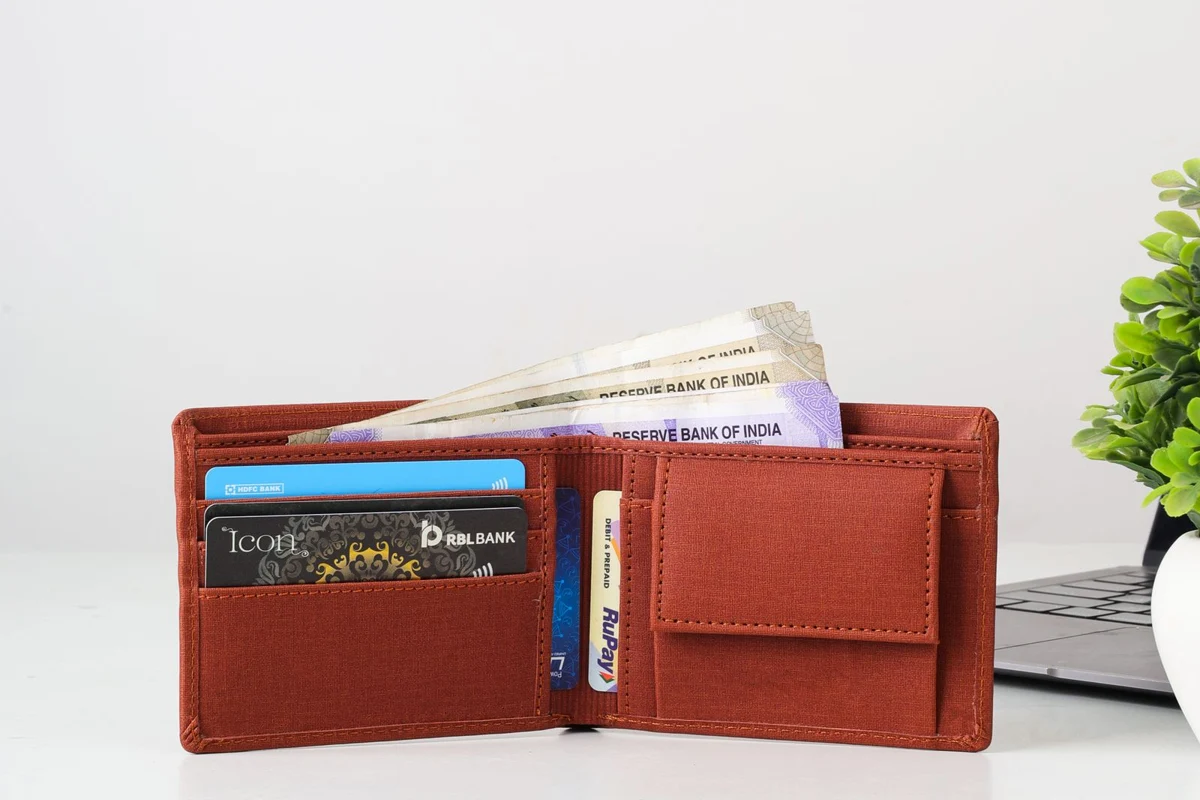
Count cards individually and check their thickness. A slot advertised for one card should not be assumed suitable for several. Include any identity document or pass that is larger than an ordinary card. Do not trim or bend an important document to make it fit a fashionable layout.
If you carry rupee notes, check that the note compartment accommodates them in the way you prefer. Some compact wallets require folding notes, while others have a full-length section. Coins need their own consideration; a slim card holder does not become a coin purse because it has one small open pocket.
Try the sequence at the counter
Imagine paying while holding a bag. Can you reach the usual card without removing several others? Does the coin section open without spilling into the note compartment? A layout that looks orderly when laid flat may be fiddly in one hand.
Check the closure with a realistic permitted load. A snap or zip should not need force because every slot is filled. Too much thickness can make the wallet awkward in a pocket and put unnecessary strain on seams.
Choose where receipts will go. If they are regularly needed, one temporary space may help, but empty it often. A wallet should not be the permanent filing system for warranties and large invoices.
Treat protective claims separately
If a wallet advertises an electronic-protection feature, read what the maker actually claims and for which use. Do not treat a label as a guarantee against every kind of fraud or loss. Physical access, how the wallet is carried and ordinary account precautions remain separate matters.
Look at the care needs of the material and the edges that will rub against clothing. A light-coloured finish may show use differently from a dark woven one. Pick a layout that works first, then choose the appearance you want to carry. The smallest wallet is useful only if it holds the necessary contents without becoming a tightly packed puzzle.
Check the pocket and the person
Place the filled wallet in the pocket or bag compartment where it will normally live. A wide wallet may lie flat on a counter yet be awkward in a narrow pocket. A very small one can disappear into a deep bag unless it has a regular place. Neither format is inherently better; the storage position should decide.
If choosing a wallet as a gift, ask about the recipient’s habits rather than copying your own. Someone who carries coins and folded receipts may not enjoy a minimalist card sleeve, while someone who rarely uses cash may find a large compartmented wallet unnecessary. A size and layout preference is useful information, not a detail to leave to chance.