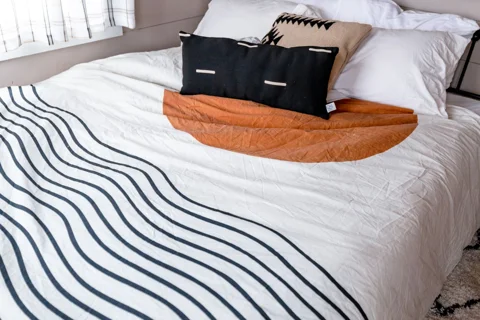
A table runner for everyday meals
A runner can mark the centre of a table without taking over the places where people eat.
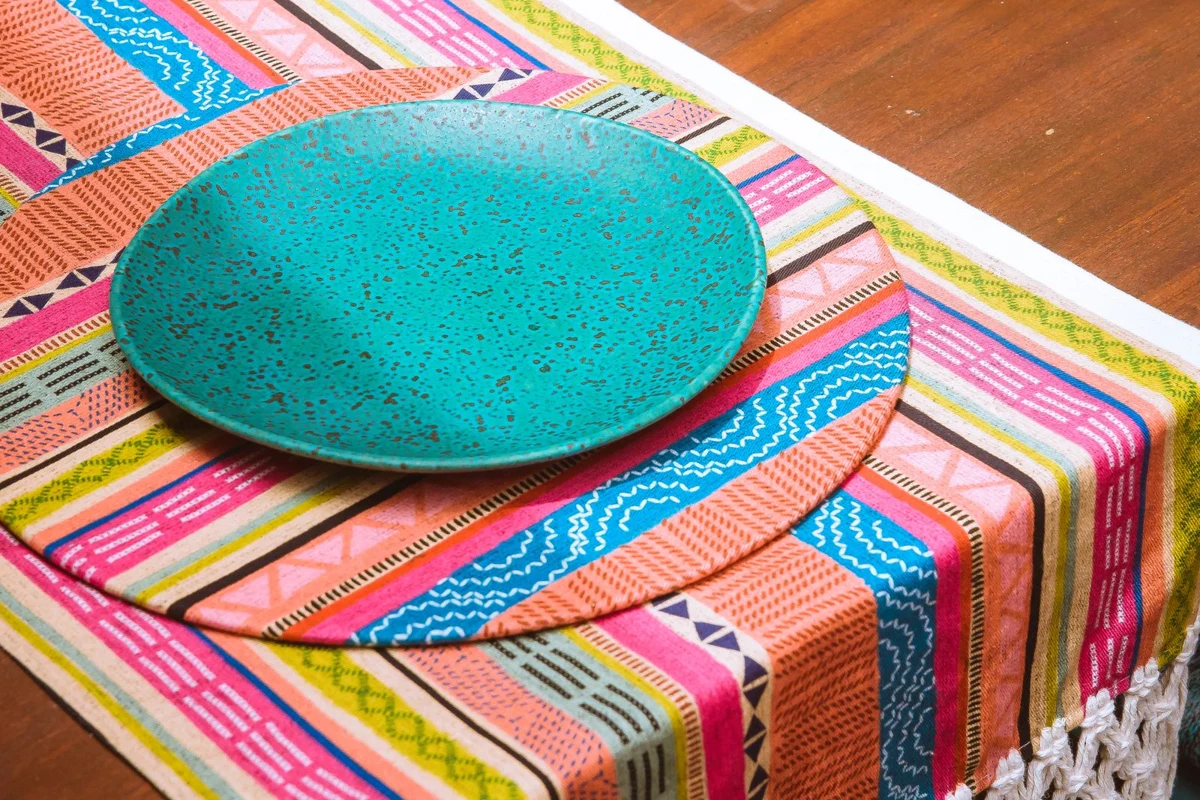
Choose the part of the table it will occupy
Lay a strip of paper or a spare piece of cloth along the table to explore the width. Put out the plates, glasses and serving dishes you normally use. If they all sit partly on and partly off the proposed runner, choose a narrower one or reconsider the arrangement.
Decide whether the runner should end within the tabletop or hang beyond its ends. Either can work, but the dimensions must suit the table rather than the display photograph. With an overhang, check that seated people and passing bags will not catch it.
A runner across a small table may serve two opposite settings, while a lengthwise runner can leave the side places clear. Try the arrangement before buying additional matching pieces. The table's daily use is a better guide than a rule that every runner must extend a fixed distance.
Consider what stands on it
Keep glasses and narrow-based objects on a stable, level surface. Heavy embroidery, large seams or loose tassels can make a seemingly flat runner uneven. If the design is raised, leave those areas decorative rather than balancing a filled glass on them.
A runner is not automatically a heat protector. Use trivets suitable for hot cookware and the table surface beneath. Do not rely on several layers of cloth to make an unknown material safe for a hot pan. Keep the ends and loose fibres away from flames when using candles or diyas.
For everyday meals, inspect how easily the fabric can be cleaned. A runner placed beneath shared serving bowls will encounter spills, not just decorative objects. Read the label before assuming it can be washed with ordinary kitchen linen.
Keep the arrangement simple
If the table already has a strong pattern or varied wood grain, a plain runner may be enough. If you prefer to see the tabletop, a shorter centre piece can leave most of it visible. There is no need to add a tablecloth underneath unless it has a purpose.
After use, remove crumbs and deal with marks according to the fabric instructions. Put the runner away dry, with its tassels or trim protected from catching. A piece that can be taken out and laid down without elaborate preparation is more likely to earn its place at weekday meals.