A rolling pin that suits your work surface
Length, weight and the board underneath should be considered as one working arrangement.
Measure the rolling area
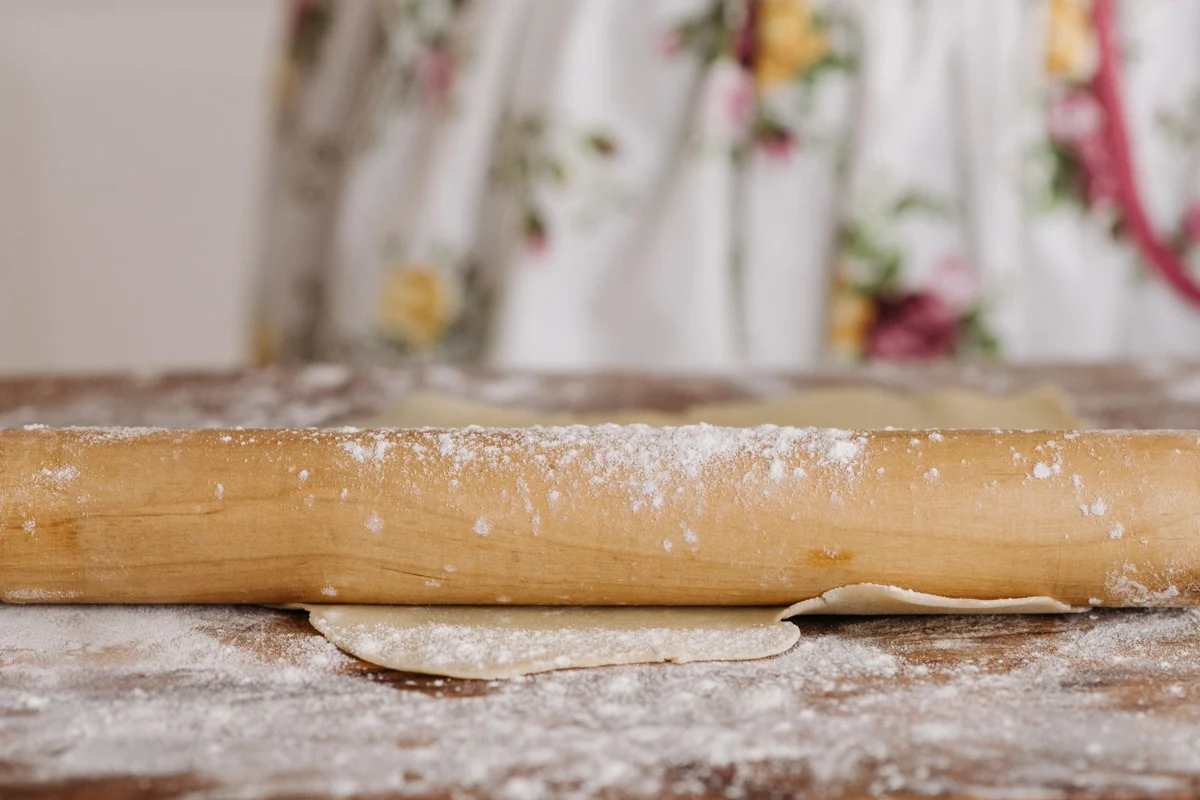
A long rolling pin needs room beyond the dough. Measure the board or clear worktop you use and leave space for your hands at each end. A tool that fits inside a drawer can still be too wide to move comfortably between a wall and a nearby appliance.
Think about whether you roll on a separate board or directly on a suitable counter. A board should remain stable under the pressure of the task. If it slides, address that according to its design rather than choosing a heavier pin and hoping the problem disappears.
Different grips feel different
A straight pin, a tapered one and a pin with rotating handles invite different hand positions. If you already have a comfortable method, identify the inconvenience before changing designs. Perhaps the pin is too short, too heavy or difficult to clean; none of those necessarily calls for a completely different grip.
Handle clearance matters on a small board. A pin with pronounced end handles can make the useful rolling section shorter than the overall length suggests. Read both measurements where available. A solid straight pin may use more of its length, but it also needs a grip you can control.
Weight is a personal working preference rather than a quality ranking. A very heavy pin can feel reassuring at first and become tiring during several batches. A lighter one may need a different technique. Try holding the cool, clean display item if the shop permits, without assuming that its appearance predicts comfort.
Care belongs in the purchase
Wood, stone and metal designs can have different cleaning and storage requirements. Follow the maker's instructions, especially for wooden tools that may not tolerate soaking or dishwashing. Do not apply a finish or household oil unless the manufacturer recommends it for that food-contact item.
Check where the pin will dry and where it will stay between uses. A narrow drawer may trap dampness if the tool is put away too soon. An open shelf needs a position where the pin will not roll off or gather cooking splashes.
There is no need to buy a full rolling set if a familiar board already works. Compare the new pin with that board and with the dough you regularly make. A tool that suits your existing space is more likely to be used than a larger set that has to be unpacked for every small batch.