A container for the rice you actually buy
Bag size, shelf height and the way you scoop matter more than a container labelled large.
Start with the packet
Write down how much rice you normally buy and where the unopened bag currently sits. A container described in litres is not automatically equivalent to a particular weight of every grain. Shape and fill level also affect usable capacity. Ask for the maker's stated capacity for the intended contents where available, and allow room to handle them.
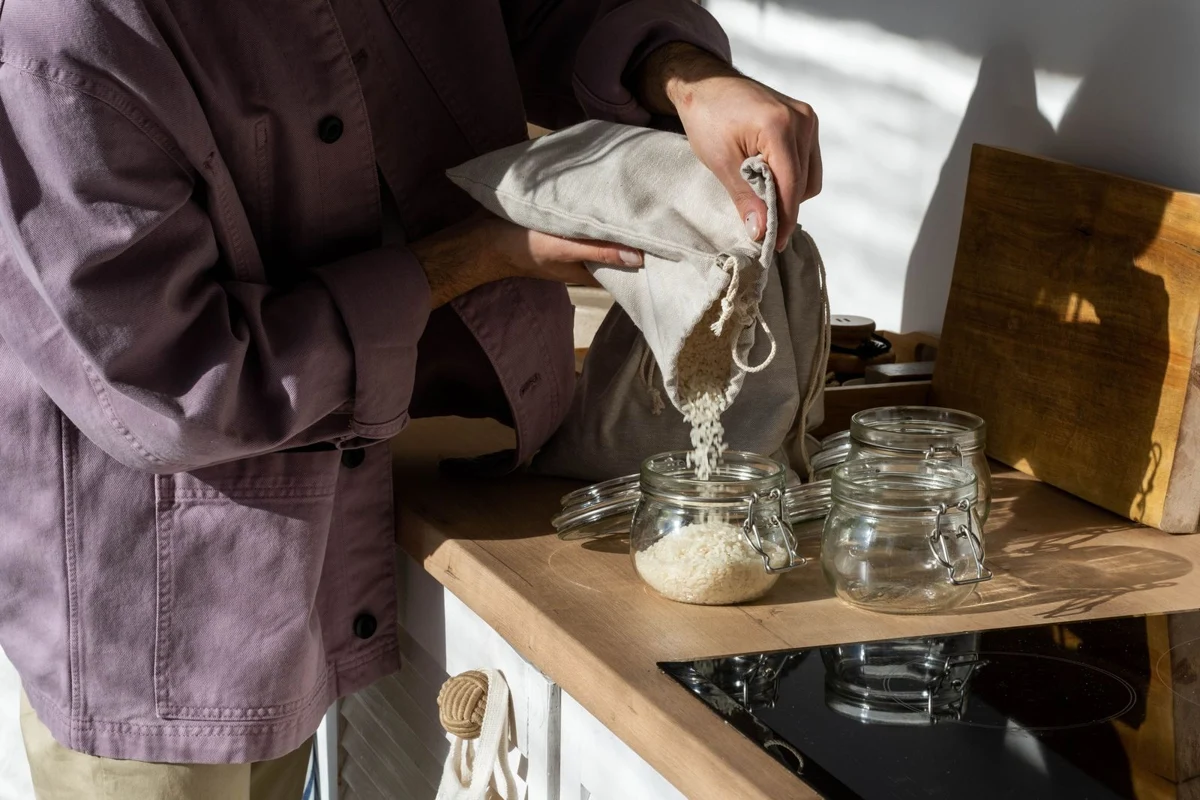
There is no obligation to decant a whole large bag into one vessel. A smaller working container with the remaining supply stored appropriately may be easier to lift. If you choose that arrangement, keep both parts identified and follow the rice packaging's storage instructions.
Decide whether it will move
A container filled on a low shelf and left there needs a different grip from one lifted onto the counter every day. Think about the full load, not the empty plastic tub. A small moulded handle may be comfortable for carrying an empty vessel but awkward when it is filled.
Check the lid's opening space. A tall hinged lid can hit the shelf above, while a loose lid needs somewhere to rest. A narrow mouth may force you to tilt the whole container rather than use a scoop. Measure the shelf depth and door opening as well as the available height.
If using a scoop, keep it clean and dry and store it in the manner appropriate for the product and food. Do not use a damp utensil fresh from the sink. A dedicated scoop is convenient only if the handle and bowl remain easy to reach without burying your hand in the contents.
Make bulk buying fit the cupboard
Suppose the most convenient shopping size is larger than the container you can comfortably handle. It may be more practical to keep a modest working quantity accessible and store the rest appropriately in its packaging or a suitable container, following the food's instructions. The important point is to keep the two quantities identifiable and rotate them deliberately.
Before buying a bulk bin, check whether the shelf is strong enough for the intended filled weight and whether you can reach the bottom comfortably. A tall vessel on a high shelf can require lifting or tipping at an awkward angle as it empties. A shorter container on a lower shelf may use more floor area but make the daily task easier.
Do not let the container determine how much rice you purchase. The household's use, suitable storage space and the packet's guidance should come first. An oversized bin can create pressure to buy enough to fill it, even when a smaller quantity would be easier to manage.
Plan for the empty day
The container will eventually need cleaning. Can it fit in the sink, and can every corner be reached and dried? An enormous bin that cannot be handled comfortably may encourage endless topping-up instead of a clear rotation. Choose a size that makes the maintenance realistic.
Keep the packet's date and storage information, particularly when decanting removes it from view. Review older contents before adding a new bag. If there are signs of pests, moisture or damage, deal with the food and storage problem rather than assuming a tighter lid will put it right.
Place the container in a suitable dry location away from obvious water leaks and heat sources. The word airtight on a product page does not replace attention to the room, the contents or the closure. A modest container with a lid that is consistently closed properly is more useful than an oversized bin that is difficult to access.