Choosing an oil pourer you can clean
A controlled stream is useful, but so is access to the inside of the spout.
Follow the oil back into the bottle
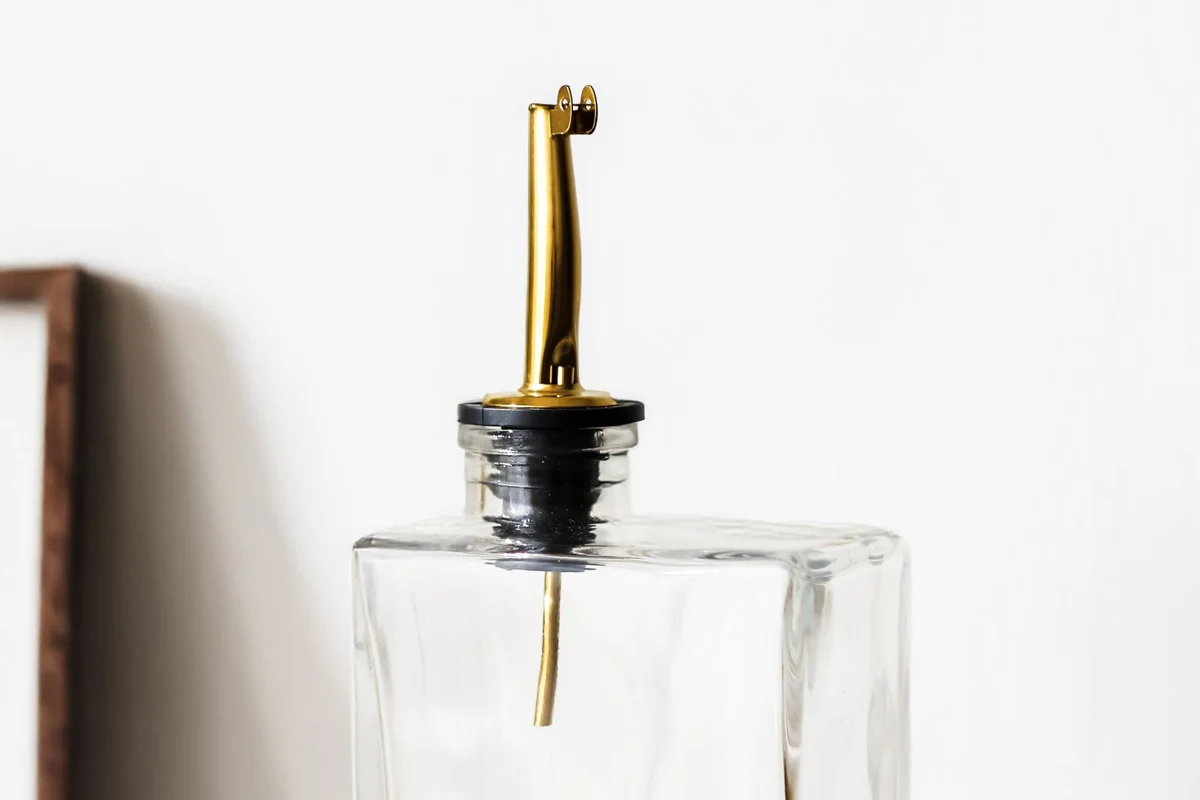
An oil dispenser is often photographed at its neatest moment: a narrow stream leaving a spotless spout. After several meals, the useful questions are different. Does a drop collect beneath the tip? Can the cap and spout be removed as instructed? Can you clean the parts that the oil touches?
Look for an explained assembly rather than a decorative neck that cannot be reached. Some dispensers are designed to come apart for washing, while others have different care requirements. OXO's precision-pour design, for example, describes a lid that separates for cleaning. That feature is worth looking for, without assuming every similar bottle has it.
Choose a working quantity
A smaller pourer can be easier to control than a large heavy bottle. It also needs refilling more often. Decide how much you use between normal kitchen-cleaning sessions, and choose a capacity that balances those two jobs. Keep the original oil's storage guidance and dates available when decanting.
Do not repeatedly add new oil over an unidentified remainder merely to keep the bottle looking full. Establish a way to empty, clean and dry the vessel when appropriate. Water left in a narrow neck is easy to miss, so inspect the parts before filling them again.
A wide mouth makes refilling simpler, but a funnel may still be needed. Think about where the bottle will stand during that operation. A slender dispenser can be attractive on a tray yet unstable while its heavy top is removed. Use a clear, stable work surface away from the hob.
Store it for the oil, not the photograph
Follow the oil packaging's storage instructions. A display beside a hot cooking zone or in strong sunlight may be convenient without being suitable. The container's appearance does not change the requirements of its contents.
Check the grip with the bottle's likely filled weight in mind. A smooth surface can become slippery if drips are not wiped away. A closure that needs two hands may be inconvenient during cooking but acceptable if you measure oil before heating the pan.
If the original bottle already pours cleanly and fits your storage, a second vessel may add work without adding much control. A dispenser earns its place when it makes a repeated task easier and can be maintained as readily as the container it replaces.