Kitchen towels for drying, wiping and handling
Separate cloths by job rather than expecting one damp towel to do everything.
Give each cloth a role
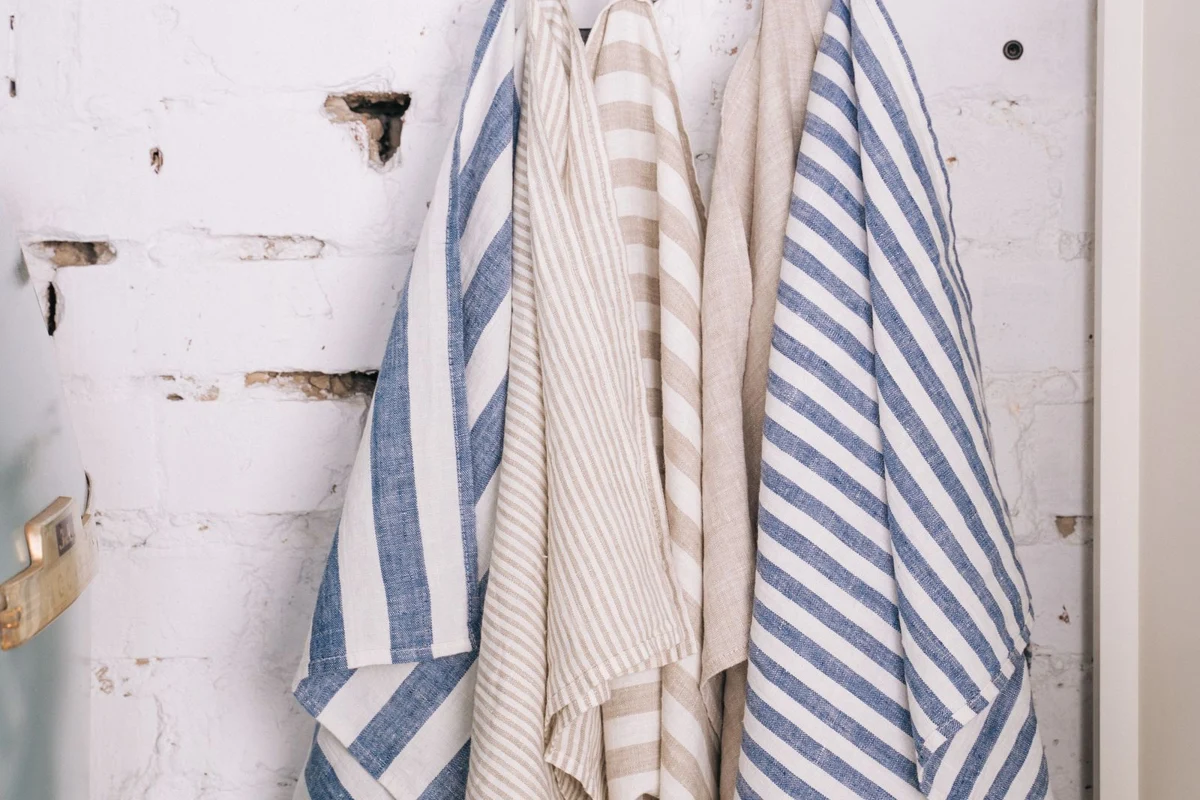
A towel for drying washed dishes, a cloth for wiping the worktop and protection for handling hot cookware are different things. Keeping them separate makes the routine easier to follow. A convenient hook near the sink can help, but the household needs to know which cloth belongs to which task.
Do not use a damp tea towel as a substitute for suitable heat protection. Choose purpose-made items for hot cookware and follow their instructions. A towel that feels thick or has a decorative kitchen print is not automatically intended to protect a hand from heat.
Buy for the drying space
Large towels cover plenty of surface but need room to hang open. If the only available rail is short, a very thick cloth may remain folded and damp. Compare the towel's dimensions with the actual rail rather than choosing the biggest size in a pack.
For drying dishes, look at absorbency claims alongside care instructions and the finish. A cloth that leaves lint may be frustrating on glassware. If you can inspect a sample, check the edges and hanging loop. A weak loop can make an otherwise useful towel difficult to keep off the counter.
Patterns can help identify roles, but elaborate colour coding is unnecessary. Two clearly different types may be enough. Keep a clean replacement within reach so a wet or soiled cloth is not used simply because the others are stored elsewhere.
Make washing ordinary
Follow the fabric's care label and wash according to use and soiling. Do not let a large reserve of towels become a reason to leave dirty ones bundled in a damp pile. Give used cloths a suitable place while they wait for washing, and keep them apart from clean ones.
Dry thoroughly before folding and putting away. In humid weather, a smaller batch with enough air around each towel may be easier to manage than a crowded rail. Choose the number of towels around the washing routine you actually maintain, with some allowance for a slower drying day.
Before buying another matching pack, count the cloths already in circulation. Retire badly damaged ones from food-related tasks and keep only the quantities that have a clear use. A small, understandable rotation is more convenient than a drawer full of indistinguishable towels.