Picking a kadai you can lift when it is full
Capacity is useful only when the shape and handles let you work comfortably.
Litres do not describe the whole vessel
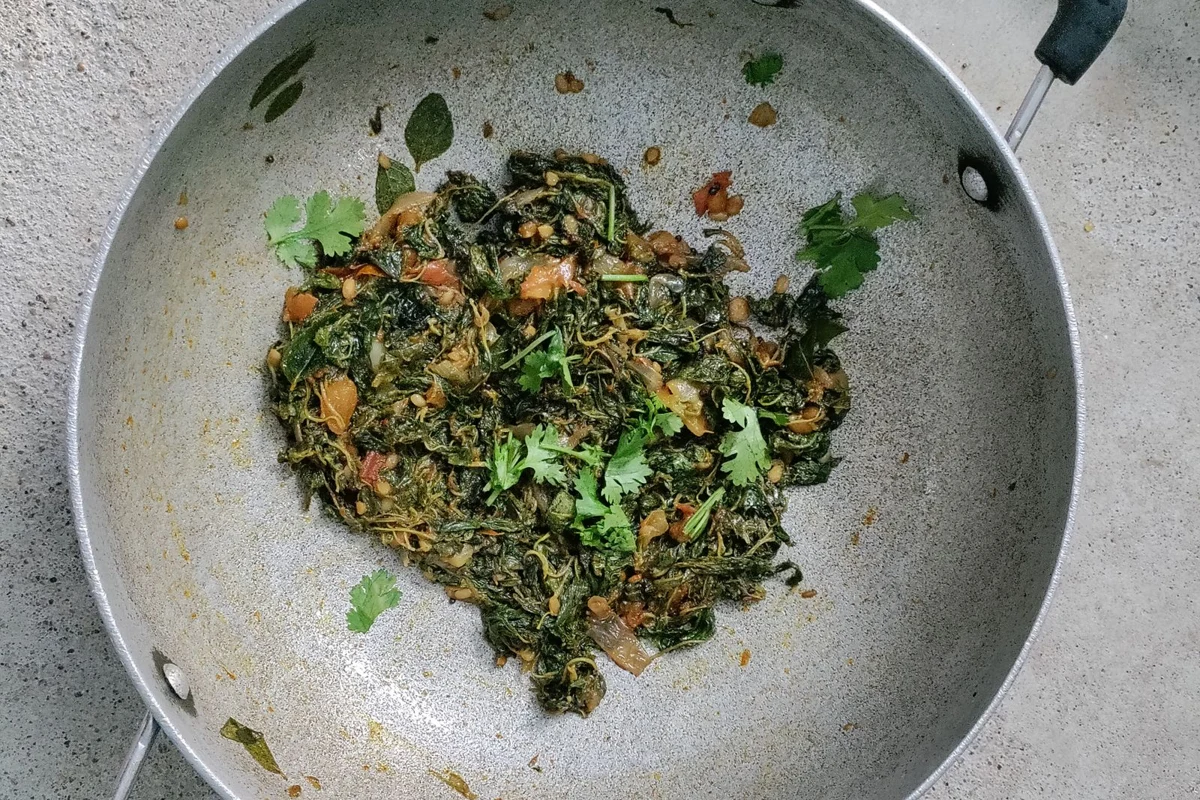
A kadai with steep sides can hold a generous volume in a relatively small footprint. A broader, shallower one may give more room for moving food across the base. Compare the diameter, depth and base shape as well as the stated capacity. Two vessels carrying the same litre figure need not feel alike in use.
Consider the portion that fills your present kadai comfortably. If food is hard to turn without spilling, you may need working space rather than simply more volume. Leave the appropriate room for the cooking method and follow the product's directions; a brimful capacity is not a suggested working fill.
Try the carrying position
Two loop handles invite a two-handed lift, but their size and angle matter. Can you get a protected grip without your knuckles approaching the vessel? A tiny loop that looks neat on a shelf may be difficult to hold with oven gloves. Handles can become hot, so do not judge them only with bare hands in the shop.
Weight should include the lid in your comparison. A thick glass lid adds another object to lift and a hot, wet surface to place somewhere during stirring. Decide where it will rest without obstructing the preparation area. A lid that cannot stand securely should not be balanced against a wall beside the burner.
Walk through the route from hob to serving area. A heavy, full kadai may be better served from where it stands safely than carried across a crowded room. If moving it is part of your routine, choose a size that you can control and leave a stable heat-resistant landing place nearby.
Check what happens below
A round or curved underside needs a suitable support. Do not assume that every kadai will sit securely on your particular hob. For induction, verify the actual model's compatibility and the base dimensions. A steel description by itself does not settle that question.
Cleaning access is easy to overlook. Deep curves can make a small sink awkward, and tightly enclosed handle fittings may collect residue. Read whether the finish allows soaking, dishwasher use or particular scrubbers. Those permissions differ between seasoned iron, coated and uncoated products.
If cupboard space is limited, measure the span across both handles. That is often the dimension that prevents a door from closing. Buying the slightly smaller vessel that is easy to use every day can be a better fit than storing a larger one in a remote cupboard for an occasional extra portion.