Choosing a chopping board that stays put
A board needs a stable work surface and a realistic route through washing and drying.
Check the counter first
A large chopping board is useful only when it can sit securely on the available worktop. Measure the clear area beside the hob and sink, allowing room for ingredients and a bowl. Do not count the space occupied by a kettle or appliance unless you genuinely move it every time you prepare food.
Look at the underside and the manufacturer's directions for keeping the board stable. Feet, grips and reversible surfaces have different arrangements. A board should not rock or slide while cutting. If the worktop is uneven or wet, resolve that rather than relying on the weight of a heavy board alone.
Match the size to the preparation
For a few onions, a medium board may be enough. Preparing several vegetables together benefits from space to separate the uncut pieces from the finished pile. A very small board can lead to food spilling across the counter; a very large one can make washing difficult.
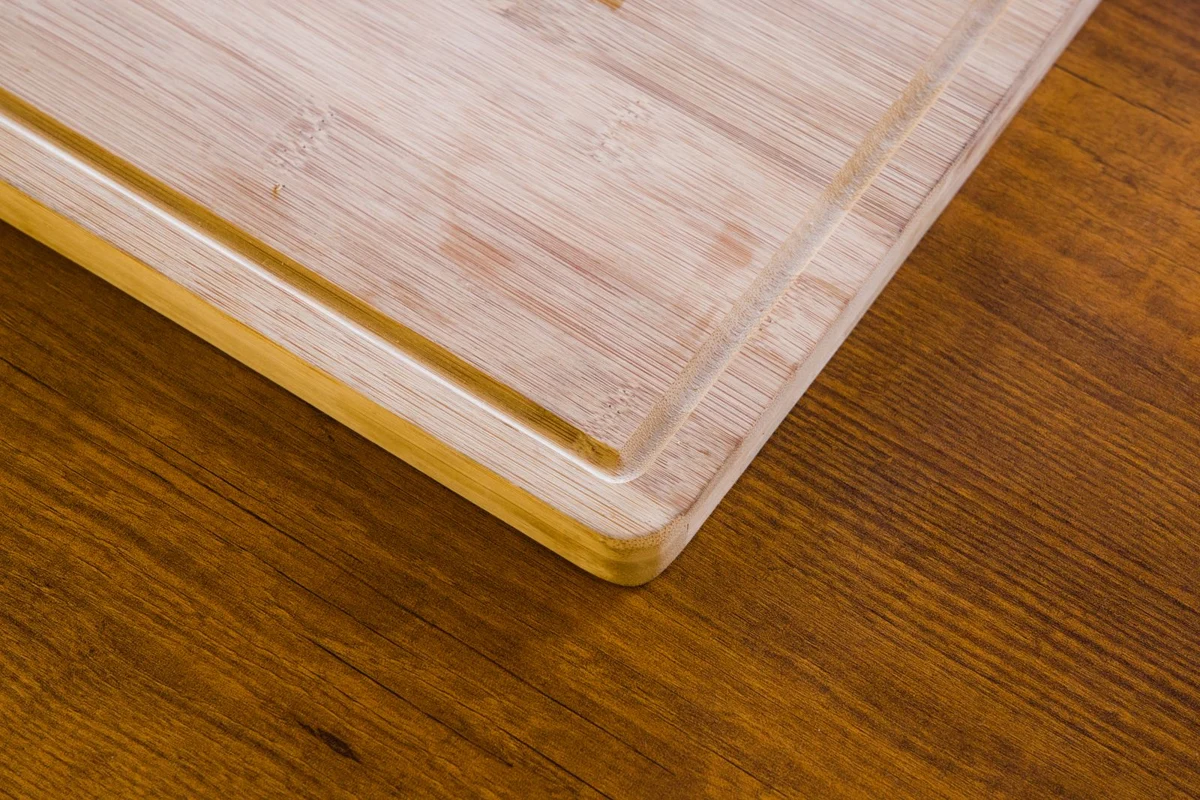
A juice groove takes space away from the central cutting area and adds another channel to clean. That may be useful for some tasks and unnecessary for others. Compare the actual working rectangle rather than just the outer measurements. If you scrape chopped food into a pan, think about how comfortably you can lift and control the loaded board.
Material affects the care routine. Wood, bamboo and plastic products can have different washing and maintenance instructions. Do not transfer dishwasher permission from one board to another. IKEA's care guidance, for example, distinguishes material choices; the label on the particular board remains the instruction to follow.
Give it a drying position
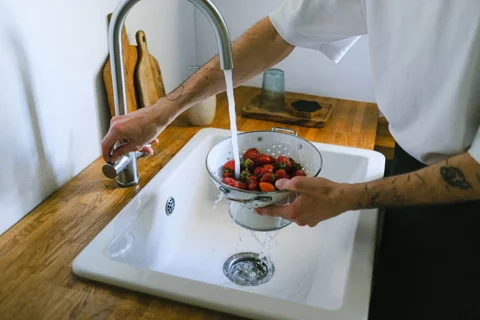
Measure whether the board fits in the sink and can stand securely to dry without falling against fragile items. A thick board that stays damp against a wall may not suit a small kitchen with little drying space. Put it away only after appropriate cleaning and drying.
Use a food-handling routine that keeps raw ingredients from contaminating ready-to-eat food, and clean the board appropriately between tasks. A colour code is useful only if everyone understands it; a blue board does not clean itself or establish a universal use.
Inspect the surface over time. Deep damage, cracks or areas that cannot be cleaned properly deserve attention under the maker's guidance. The aim is a board that supports controlled preparation and can be maintained, not the heaviest or most decorative slab the cupboard can hold.