A colander that fits both sink and cupboard
The bowl, feet and handles all need to fit the place where draining happens.
Put the sink in the comparison
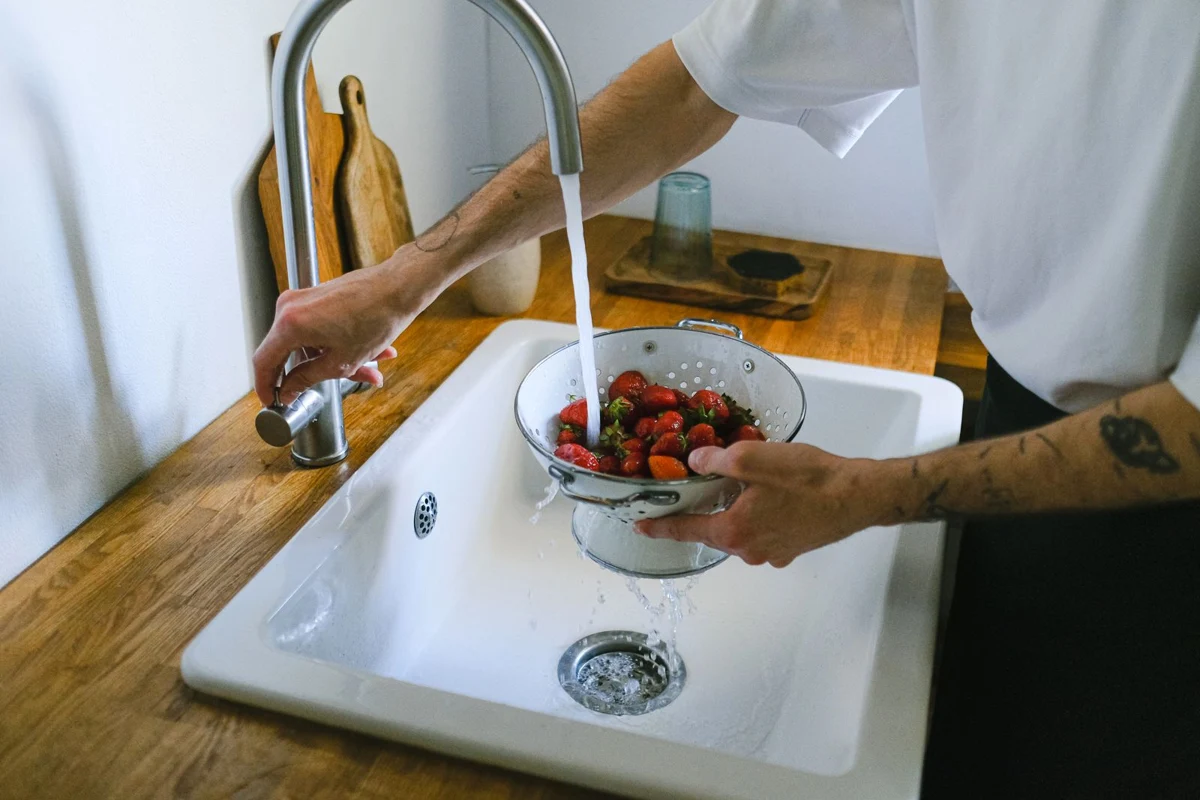
A colander may be wide enough for a family meal and still be awkward in a small sink. Measure the basin and the available space beneath the tap. Include the handles and feet, which can make the outside dimensions much larger than the bowl itself.
Decide whether you need a freestanding design or one intended to bridge the sink. A bridging model needs compatible supports and a stable fit; do not assume extendable arms will suit every basin. A freestanding one should sit securely without rocking on the surface where you use it.
Look at the holes
Large perforations drain readily but may let small ingredients pass through. Fine mesh suits different jobs and can take more effort to clean. Think about what you drain most often. Rice, noodles and washed vegetables do not necessarily call for the same opening size.
The useful capacity is the amount you can handle without food spilling over the rim. A shallow colander can spread vegetables out but occupy considerable cupboard space. A deep one may nest neatly in a bowl, although the handles can prevent a close fit. Try the intended storage arrangement rather than buying by volume alone.
For hot food, check that every component is suitable for the use. Handles, folding joints and flexible sections can have different limits from the main body. Plan the movement from pan to colander and keep clear of escaping steam; a large capacity does not remove the need for a controlled lift.
Count the joints at washing-up
Inspect where the base meets the bowl and where handles attach. These places should be reachable for cleaning. A collapsible design saves height but adds folds that need attention and drying. Choose that trade-off because it helps your cupboard, not just because the product looks clever.
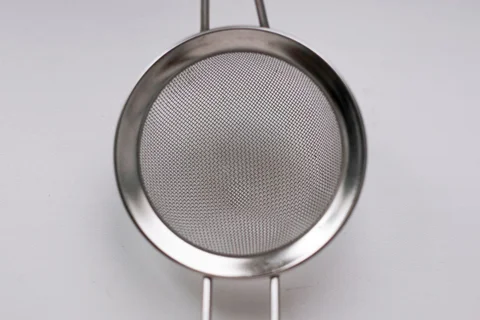
If you already own a suitable sieve, consider whether a second draining tool fills a genuine gap. A colander can be useful for larger quantities while the sieve handles fine ingredients. If both would do the same occasional job, one well-fitting item may be enough.
Leave the chosen tool where it can dry properly before nesting it away. A compact stack is convenient only when it does not keep water trapped between pieces.