A tablecloth with the right amount of overhang
Measure the tabletop and decide on the drop while the chairs are in use, not only when the table is empty.
Work from the tabletop
For a rectangular table, add twice the desired drop to each tabletop dimension. For example, a tabletop measuring 120 by 75 centimetres with a 20-centimetre drop on each side needs a cloth about 160 by 115 centimetres, before any product-specific shrinkage allowance. This is a measuring example, not a required drop for every table.
A round table uses its diameter plus twice the drop. An oval table needs attention to its shape as well as its maximum length and width. If the cloth is rectangular, check how the corners fall around the oval ends. They may hang lower than the rest of the edge.
Measure extension leaves in the arrangement you actually use. A cloth that works for the compact table may be too small for a gathering, while the larger cloth can trail excessively when the leaves are removed. Two different sizes may make more sense than forcing one to do both jobs.
Pull out a chair
Sit at the covered table before deciding the drop is right. Check whether the cloth catches on knees, chair arms or a child's seat. A long formal drop may look attractive but get pulled during an ordinary meal. Keep moving fabric away from candles, diyas and other heat sources.
If the table is used for homework and meals, consider how often you will remove the cloth. A fabric that needs careful ironing every time may not suit that rhythm. A plain washable cloth can be easier to rotate, provided its care instructions fit your machine and drying space.
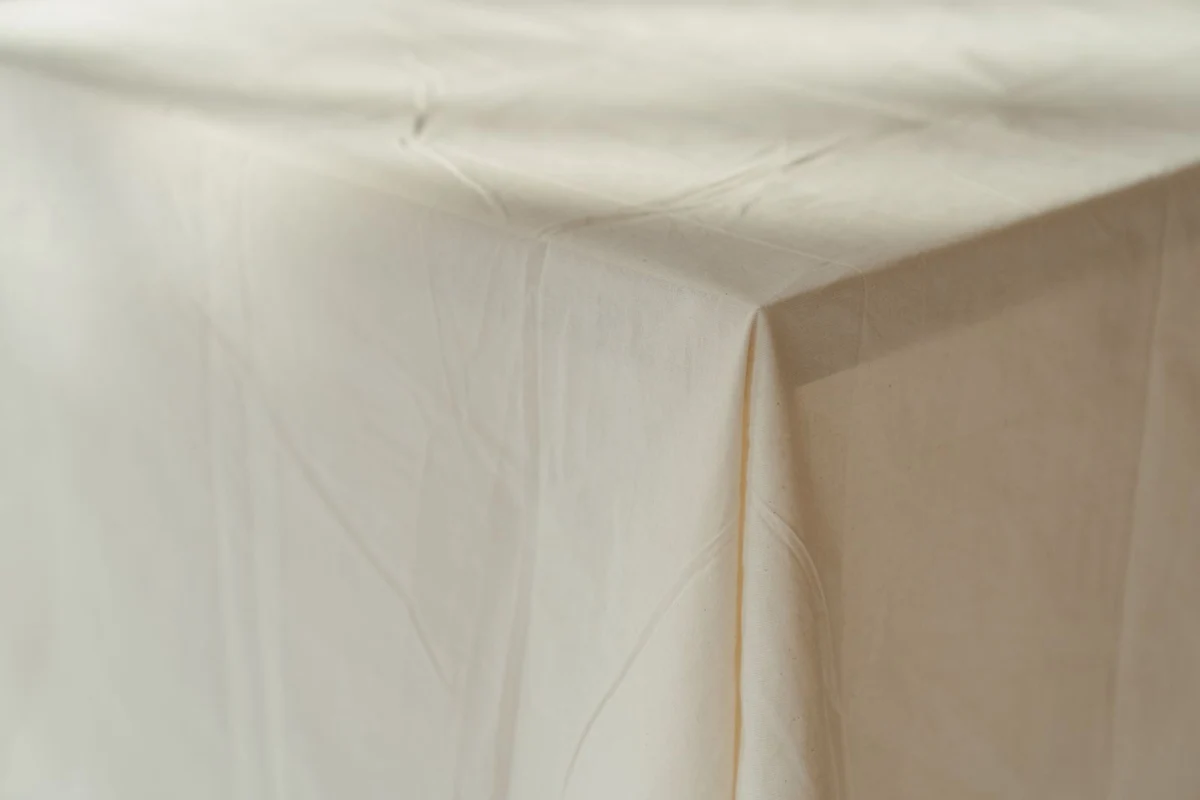
Look at the corners and hems in a close-up photograph. Uneven edges are noticeable on a simple table, and thick decorative borders may interfere with place settings. Check whether the cloth has been styled over a separate undercloth in the product image; that extra layer may not be included.
Allow for the first wash
Ask whether the stated size is the finished product size and whether the manufacturer gives shrinkage information. Do not assume every cotton cloth needs the same allowance. Follow the care label before any permanent alteration.
Fold a clean, dry cloth so its size label remains easy to find. If several similar cloths live together, note which table arrangement each fits. That small record saves unfolding every piece just as guests arrive.
When the table is used outside
A cloth used on a sheltered balcony has a different job from one in a still dining room. Check the weather suitability of the material and keep loose overhangs from catching on passing people. Wind can move a cloth and the objects resting on it, so bring the arrangement inside when conditions are unsuitable.
Do not use a decorative object as an improvised heavy anchor at a hanging corner. If using a purpose-made fastening, follow its instructions and make sure it suits the tabletop without damaging it. After an outdoor meal, remove the cloth, check for damp patches and dry or clean it as needed before folding it back into the indoor linen stack.