Labels you can change when the contents change
A useful label tells you what is inside today and can change when the jar is reused.
Keep the information that matters
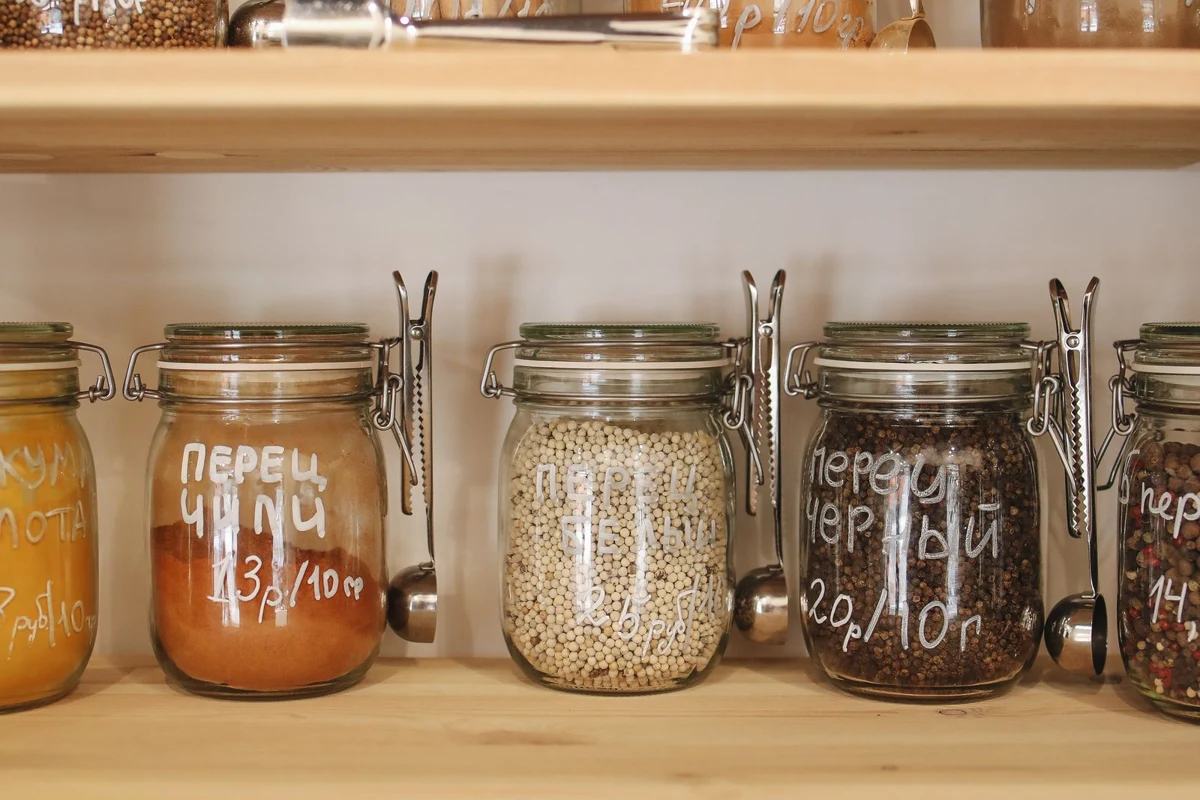
When food moves out of its packet, keep the name, relevant dates and storage instructions available. A decorative label saying grains is not enough to distinguish two similar ingredients. The label should help the person cooking, including someone who did not fill the jar.
If several products look alike, use the full name rather than an abbreviation only one person understands. Retain allergen and ingredient information from packaging where relevant; decanting should not erase details needed by the household.
Jars in a drawer are usually seen from above, while shelf containers show their fronts. Choose the label position accordingly. A beautifully written lid can be invisible on a high shelf. If the container rotates during use, a second small identifier may be more useful than repeatedly turning every jar.
Make the text readable at the actual distance. A small script font can look attractive in a close-up photograph and be difficult to read while cooking. Plain lettering with sufficient contrast is easier to identify quickly.
Match the label to washing
Check whether an adhesive label is intended to survive washing or peel off beforehand. A removable label can suit jars that change contents often; a durable one may suit a long-term assignment. Do not assume a label is dishwasher-safe simply because the container is.
Keep labels away from food-contact areas unless the product is specifically suitable for that use. Marking the outside is usually the relevant task. Let the surface dry before applying an adhesive as its instructions require, rather than trapping water beneath it.
A small changeable area can hold the date needed for your rotation. Write it in a clear format that the household uses consistently. Do not overwrite an old date until it becomes ambiguous; remove or replace the label properly.
When a container is reused for another ingredient, update the identity before it returns to the shelf. That small sequence matters more than matching every label's style. Try a few plain labels first and cook with the arrangement for a week. If the names and positions work, a more decorative version can follow without sacrificing the useful information.