Packing cubes for a bag, not a photograph
Choose a few shapes around the bag you use and the way you unpack during a trip.
Measure the inside first
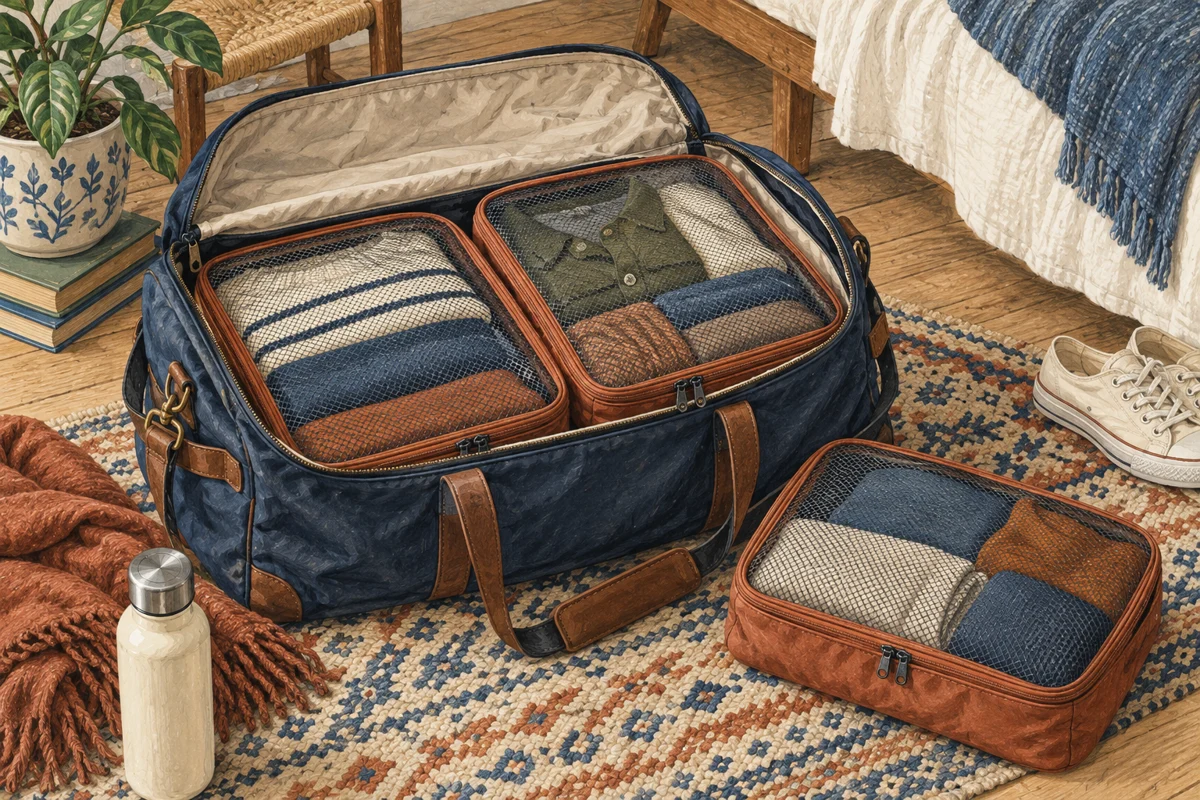
Packing cubes occupy space of their own. Start with the usable interior of your suitcase or travel bag, including any raised wheel housings, curved corners and internal straps. A set photographed inside a different case may leave awkward gaps in yours.
Check cube dimensions when filled, where the maker supplies them. A flexible empty cube can appear smaller than its packed shape. Compare the opening too: a cube that fits inside the case may still be inconvenient if you must remove everything above it to reach its zip.
Avoid buying a large set before deciding what each piece will hold. Two medium cubes may suit a short trip better than several tiny ones that divide clothing into categories nobody remembers. Leave some flexible space for a jacket, laundry or an item brought home.
Pack for the order of the trip
If the first night is a brief stop before travelling onward, put that night's clothes where they can be reached without opening every cube. For a longer stay, grouping by clothing type may make more sense. The best arrangement follows the trip rather than a fixed rule that shirts and trousers must always be separated.
For shared luggage, different cube colours can distinguish people's belongings. A small label can do the same job without replacing existing cubes. Keep valuable or essential items in the appropriate accessible place for the journey; a clothing organiser is not security equipment.
Think about what happens at the destination. Will cubes remain inside a bag, sit on a shelf or be emptied into drawers? A design that opens almost fully is convenient for seeing contents, while one with a smaller opening may be easier to lift without spilling them. Choose the handling you expect.
Compression changes bulk, not weight
A compression zip can reduce the space taken by some soft clothing, but it does not make the contents lighter. Weigh the complete luggage if the journey has a weight allowance, and check the carrier's current rules separately. Do not assume more compressed clothes mean a more manageable load.
Use the compression mechanism as instructed. Keep fabric clear of the zip and avoid forcing bulky seams into the closure. A tightly packed cube can become quite rigid and may no longer fit the flexible corner you planned for it.
Some garments are better left less compressed. If presentation matters on arrival, consider their fabric and how you will hang or care for them. Packing cubes organise clothing; they do not guarantee crease-free results. Keep the original care needs in mind rather than expecting a different folding method to overcome them.
Leave a return arrangement
Clean clothes usually take up less mental space than the mixed contents of the return journey. Plan where worn clothing will go, and do not assume a mesh cube will contain moisture or odour. Damp items should be dried when possible and separated appropriately for temporary transport.
A spare simple pouch may be enough for the first few days. If using one cube for laundry, identify it clearly and clean it as its maker directs after the trip. Avoid returning it immediately to the clean-clothing role without checking the inside.
Once home, empty all cubes, including small pockets. Follow their cleaning instructions and store them dry with zips arranged so they do not catch adjacent fabric. Keep only the sizes that proved useful together. An organiser that repeatedly stays empty is a clue to simplify the set, not a reason to invent something else to pack.
Try one complete packing rehearsal
Pack the actual clothes for a plausible trip, including the pieces you will wear on the return journey. Close the bag without sitting on it or forcing the zip, then open it as though you had just reached the first overnight stop. Remove only what you need. If several cubes have to be unpacked onto the floor, revise the grouping before adding more organisers.
Keep an accessible space for a layer that may be removed during travel. Filling every gap at home leaves no place for that jacket later. Check whether the cubes can be returned to the bag after clothing has been unfolded and worn; a packing arrangement that works only with perfectly folded fresh laundry may not survive the second day. Note which cube was useful and which mostly held air. That small rehearsal can show that a set needs one less piece, or a different size, without changing the luggage itself.