Drawer dividers for objects of different sizes
Build compartments around the objects, leaving a little room for hands and change.
Empty one drawer, not the whole room
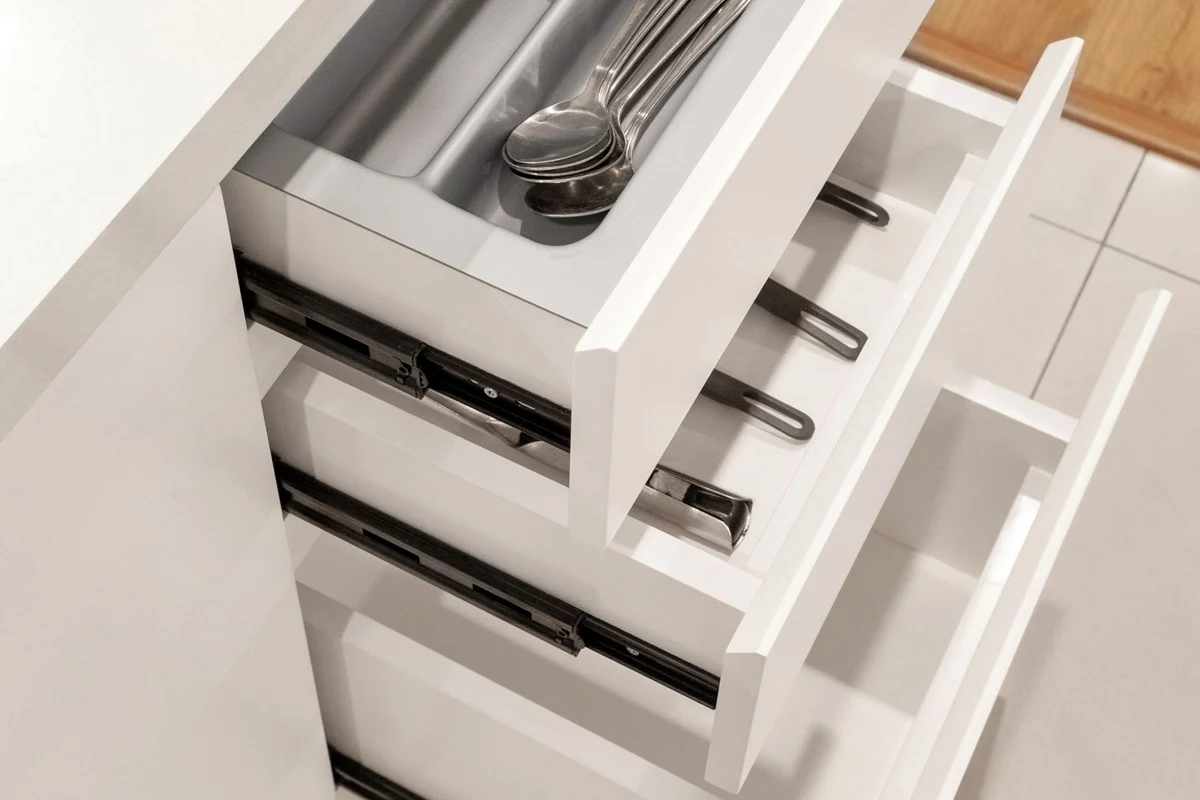
Choose a drawer with a repeated annoyance: socks that mix together, small tools that slide or stationery that disappears beneath larger items. Lay out its contents and remove things that belong elsewhere. Dividers work better after that decision than as a way to compress everything into smaller spaces.
Measure the internal width, depth and usable height. Look for curved sides, screws or runners that reduce the available rectangle. The drawer must close with the organiser and its contents in place, not merely with an empty tray on the base.
Leave some unequal spaces
A long object needs a long compartment, while several small objects may share one wider section. There is no advantage in making every cell the same size when the contents are not. A tray with fixed squares can waste space around bulky pieces and still leave a ruler or belt without a home.
Adjustable dividers offer flexibility, but check how they stay in position. Spring-loaded designs need suitable surfaces and should not put inappropriate pressure on delicate drawer sides. Interlocking strips may require trimming or assembly; read the instructions before assuming they will fit any dimension.
Allow room for fingers. A compartment packed tightly enough to keep everything upright can make the last item difficult to retrieve. If you have to pinch and pull against neighbouring objects each time, widen the space or reduce the contents.
Try it with temporary boundaries
Clean small boxes can help test a layout before buying a full organiser. Use them to discover which categories stay together naturally. If an object repeatedly lands in the wrong section, the arrangement may need to change rather than the label becoming more elaborate.
Keep one flexible area for items that change. A drawer organised around today's exact collection can become awkward after a small purchase or seasonal change. That does not mean leaving a large empty zone; simply avoid a system that requires rebuilding to accommodate one new object.
Choose an organiser that lifts out for cleaning where practical. Dust and small debris will collect beneath it. After a week, open the drawer as you normally would and check for shifted dividers or jammed items. A good layout should survive ordinary use without careful rearrangement after every closing.